Overview
In its ~550 million-year history, the vertebrate body plan has undergone radical changes. From their modest beginnings as simple tube-like forms, vertebrates have exploded into a bewildering array of shapes and sizes with jaws, teeth, fins, wings, limbs, scales, feathers and more. These external changes were matched by equally impressive rearrangements and innovations of the internal organs, glands, and nervous system. Transformations in anatomy have unlocked new modes of locomotion, reproduction, and communication, allowing vertebrates to occupy even the most extreme environments.
But how do transformations in anatomy arise? The final form of an adult animal is determined through the process of development. Development starts at fertilization—when an egg and sperm unite to form the first cell of the body—and continues as cells divide, move, and proliferate to form the embryo which grows, hatches, and matures at adulthood. This process involves many interactions between genes, cells, and the environment to establish the body plan. Changes to any of these players can lead to shifts in development and result in a modified final adult form.
In the Hawkins laboratory, we want to uncover the developmental changes that underlie major shifts in vertebrate anatomy. Our approach includes functional genetic tools, comparative genomics, and a collection of mutant lines with phenotypes that recapitulate natural anatomical transformations. We are currently focused on the fin-to-limb transition, which allowed the tetrapod lineage to invade terrestrial environments, as well as the transition from the cloaca to the independent anus in placental mammals. Click the links below to learn more about these and other projects in the lab.
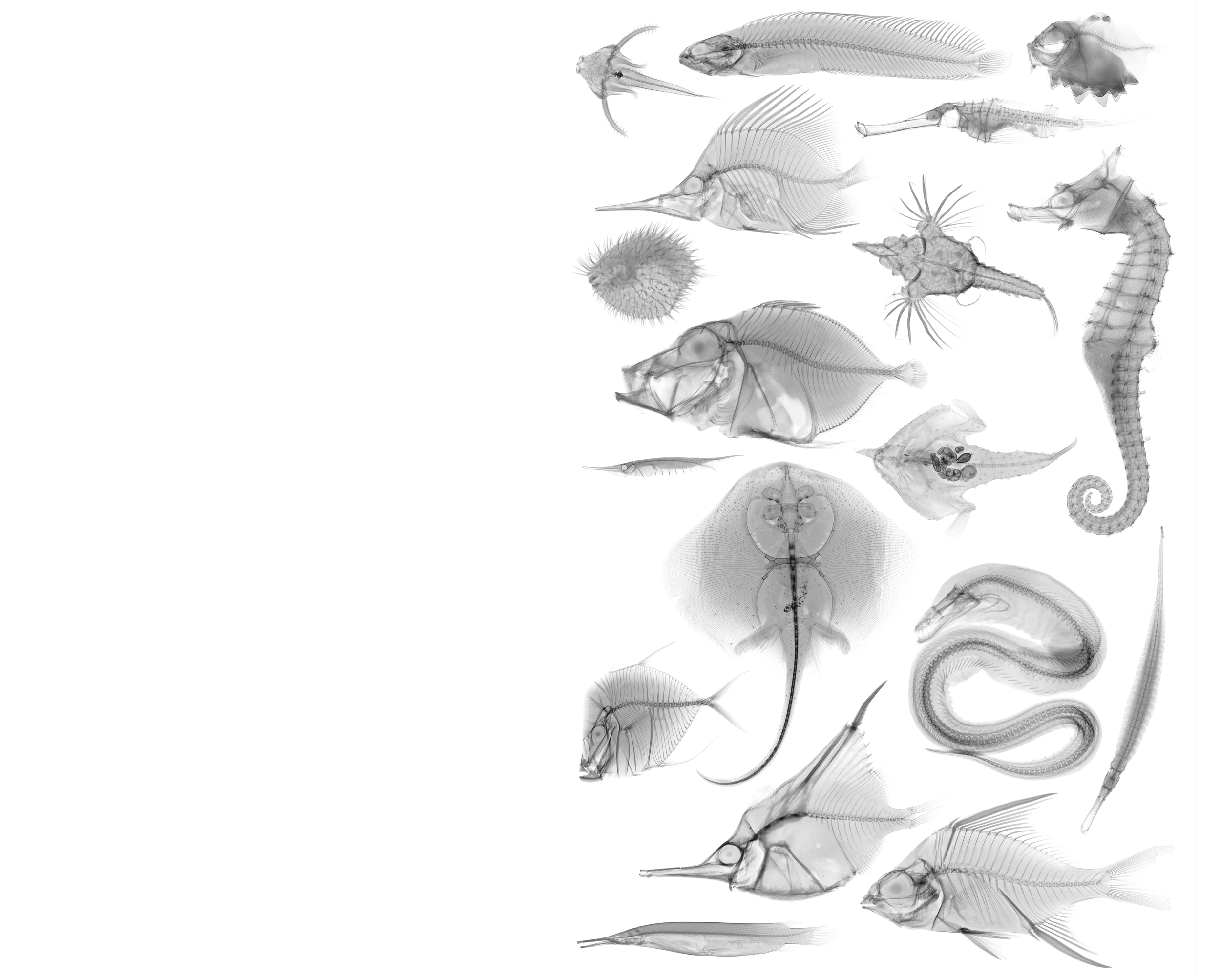
Image credit: Sandra J. Raredon, Division of Fishes, NMNH X-ray Vision: Fish Inside Out Exhibition